

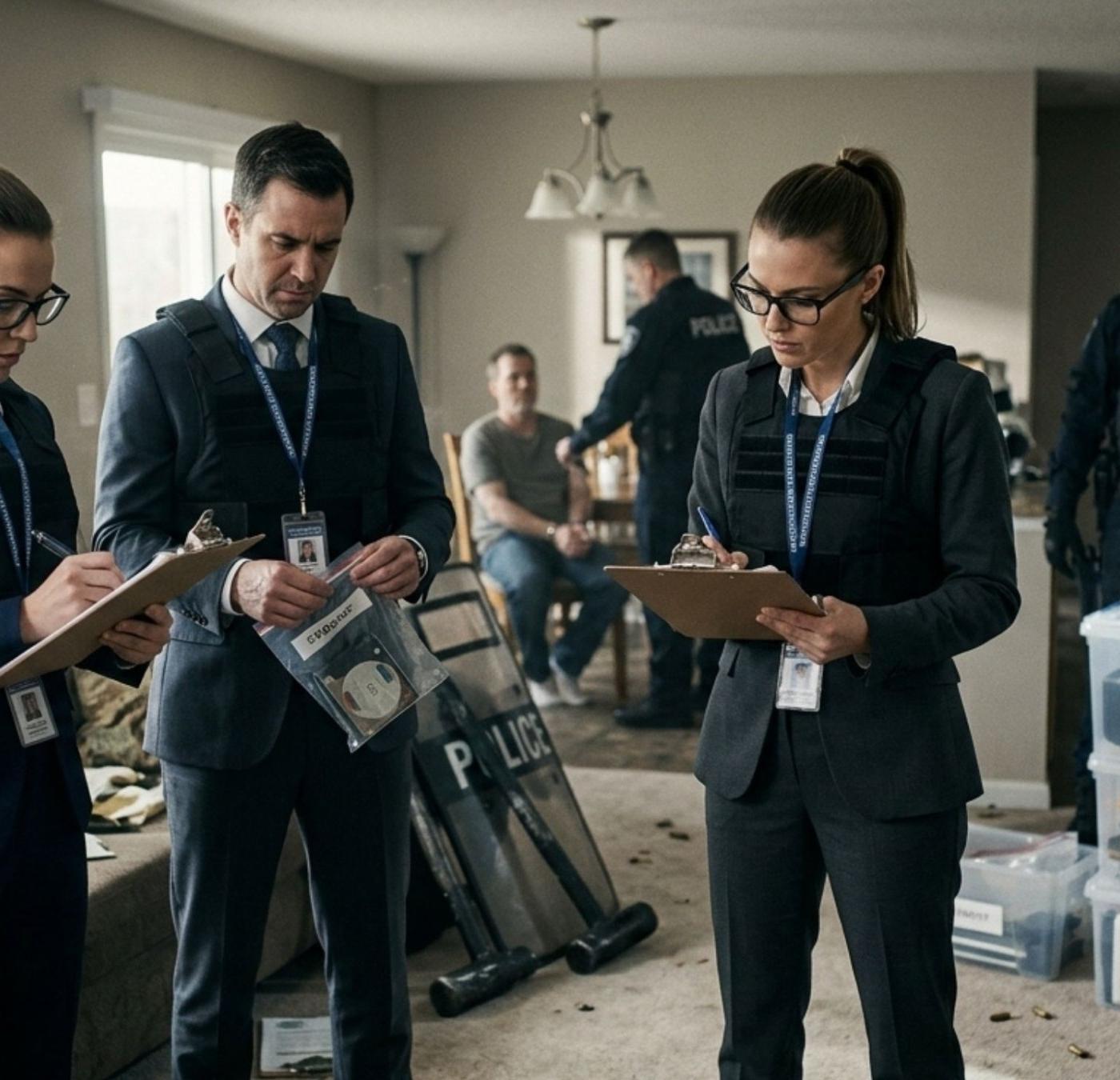
A Perth agency has been raided by Consumer Protection as regulators investigate allegations agents bought a client’s property themselves — raising a much bigger question for the industry about where disclosure ends and genuine informed consent begins.
Western Australia’s Consumer Protection division has executed a search warrant on Ideal Realty, escalating an investigation into an alleged conflict of interest involving the sale of a Kenwick home.
According to ABC News, officers searched the Willetton-based agency on 3 September after new evidence prompted regulators to reopen the matter.
The agency had already received a formal warning in August over the 2024 transaction.
At the centre of the investigation is a situation every agent and principal should pay attention to: what happens when the person engaged to sell a property also wants to buy it?
Vendor Chao Jack Wu engaged Ideal Realty agents Roy Li, whose legal name is Liang Li, and Lynn Ting, legally Lin Ding, to sell his Kenwick home.
ABC reports the pair later purchased the property through a company called Generation Two for about $705,000.
Wu later obtained a retrospective valuation that placed the property around $95,000 higher.
He told ABC he only became aware of who was behind the purchase after noticing the buyer’s name on the contract had been changed after he signed it.
ASIC records later showed Generation Two had been registered at Ideal Realty’s office on the same day the offer was made.
That is where the disclosure question becomes critical.
Under Western Australian law, an agent must obtain the owner’s written consent before becoming a party to a transaction involving a property they have been engaged to sell.
Li has told ABC he verbally informed Wu before making the offer that he and his business partner were the real buyers.
He has, however, acknowledged that Wu did not sign the disclosure form required under the legislation.
WA Consumer Protection Commissioner Trish Blake told ABC the requirement was critical because a vendor needed to be able to make a fully informed decision.
Real estate lawyer Tim O’Dwyer summed up the conflict more simply.
A buyer wants to pay as little as possible.
An agent acting for a vendor is engaged to achieve the best possible outcome for the seller.
When those two roles collide, disclosure cannot be treated as a box-ticking exercise.
None of the allegations against Li or Ding has been established through a tribunal or court process, and Li disputes aspects of Wu’s account, including what was disclosed and when.
That distinction is important.
But the broader industry lesson is equally important.
A conversation is not the same thing as a signed record.
Written disclosure exists because six months or two years later, the question should not come down to two people arguing about what they remember being said.
If breaches are established under the relevant WA legislation, penalties can reach up to $25,000 for a company and $5,000 for an individual.
For most businesses, however, the greater damage may not be the fine.
It is the reputational fallout that follows when a vendor starts asking whether their agent was acting for them, or acting for themselves.
The Kenwick investigation has also emerged alongside a separate issue involving sales figures submitted by Li to REIWA.
Li had been ranked 13th among 40 agents recognised in REIWA’s top one per cent for aggregate sales value, with approximately $132 million attributed to around 125 transactions.
REIWA disqualified him from this year’s awards in late August after ABC analysis found sale prices for at least a third of the listed properties did not match figures recorded on the state’s official land title register.
ABC also reported six properties owned by Li or Ding had been included in the submitted sales tally, contributing about $10 million to the reported result.
REIWA president Suzanne Brown told ABC the organisation had already begun taking action before Li was disqualified.
The issue has also been referred to REIWA’s Professional Standards Tribunal.
Li has acknowledged inaccuracies in the figures, saying advertised prices had been entered instead of final contract prices, and says corrected information has since been supplied to REIWA.
They are two separate matters and should be treated that way.
But they point to the same broader issue.
Real estate runs heavily on trust.
Awards rankings carry weight because the industry expects the numbers behind them to be accurate.
A vendor accepts an agent’s advice because they expect that agent to be acting in their interests.
And disclosure laws exist because a seller cannot make a properly informed decision if they do not know who is really sitting on the other side of the transaction.
For principals and networks, the takeaway is not complicated.
If an agent wants to buy a client’s property — directly, through a company, through a business partner or through any related entity — the disclosure needs to be clear, written and signed before the offer progresses.
Not mentioned in passing.
Not covered in a phone call.
Not explained afterwards.
And when sales figures are being submitted to an industry body, awards program or ranking system, agencies should be able to reconcile every number against the underlying transaction.
Because in 2026, public records are searchable, journalists are checking them and competitors are checking them too.
The paperwork is no longer the boring part of compliance.
It is the evidence that protects everyone when questions are asked.
Get tomorrow’s news, tonight.
The evening wind-down for the Australian real estate industry — everything that moved today, and what is coming tomorrow.
This article was independently written and edited by Real Estate Today. © Real Estate Today 2026 – All Rights Reserved.
Real Estate Today is an independent real estate industry publication covering Australia and New Zealand.