Property prices are falling across every capital city and much of the gains recorded earlier in the year have been erased. Yet the buyers expected to seize the opportunity are proving remarkably difficult to find.
Australia has entered the spring selling season with a market that, on paper, should favour buyers.
Prices are falling, vendors are becoming more negotiable and purchasers have more choice. But instead of first home buyers rushing through the door, many are remaining on the sidelines, wary of higher borrowing costs, further price falls and the risk of buying into a declining market.
It has created one of the more unusual conditions in Australian property: a buyer’s market without the buyers.
Figures reported by Seven News show Sydney leading the downturn, with property prices falling 1.4 per cent in the latest month. Melbourne declined 1.1 per cent, Brisbane fell 1 per cent, while Adelaide and Perth each recorded falls of 0.8 per cent.
From the March peak, values have fallen by as much as 7.1 per cent. For a property valued at $1.5 million, that equates to a reduction of approximately $106,000.
The weakness is not confined to premium homes or a handful of expensive markets.
Cotality research director Tim Lawless said the downturn had spread through almost every major metropolitan market.
“93% of suburbs around the capital cities recorded a fall through the last three months. This is clearly a correction in the market.”
Some analysts expect the broader correction could eventually reach 10 per cent.
For agents, the most telling feature of the downturn is not simply the size of the falls. It is the absence of urgency among buyers.
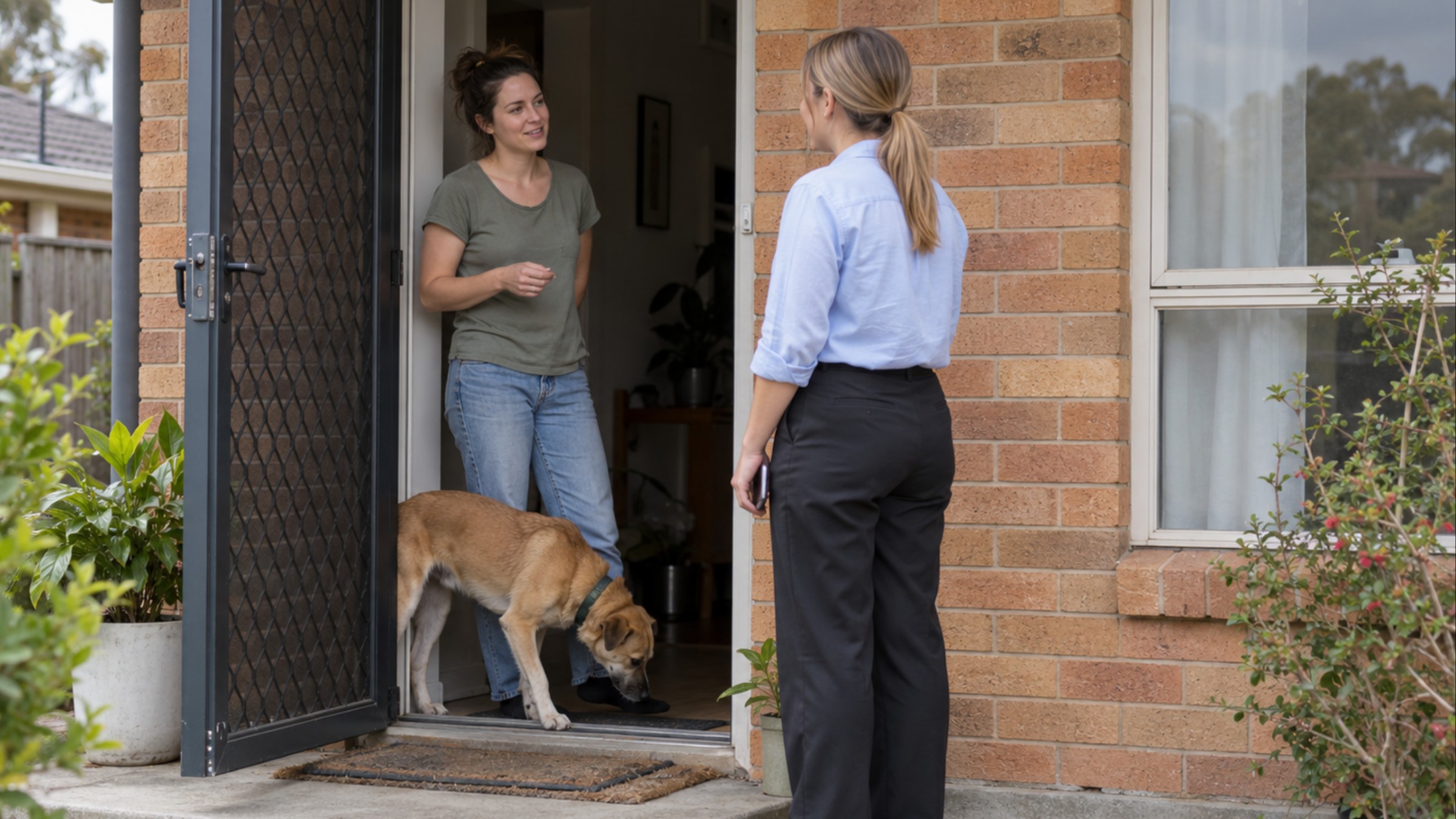
Spring would ordinarily bring renewed competition, stronger enquiry and a lift in transaction activity. This year, many prospective purchasers appear hesitant. One buyer interviewed by Seven News said his partner’s phone had not stopped ringing as agents pursued the comparatively small pool of active buyers.
Ray White agent Jo Langstaff said the caution was understandable.
“think there is a degree of hesitancy, and that's understandable.”
That reversal says a great deal about current market sentiment. Buyers who spent years competing at crowded inspections and stretching to meet rising prices now have greater negotiating power, yet many remain unconvinced that this is the right time to use it.
Interest rates are central to that hesitation. Higher repayments have reduced borrowing capacity, while the prospect of further price declines has heightened concerns about negative equity.
Seven News political editor Mark Riley summarised the contradiction confronting the market.
“But they're not, worried by higher interest rates and the prospect of negative equity as the housing industry predicts prices will bounce back next year.”
At the same time, persistent underlying inflation and renewed consumer spending have prompted major banks to warn that another interest rate increase could occur before the end of the year, potentially as early as the Reserve Bank’s November meeting.
Any further increase would place additional pressure on borrowing capacity and could suppress activity in the short term.
The longer-term picture, however, remains more complicated. Housing industry forecasts cited in the report suggest established property prices could begin recovering next year.
Housing Industry Association chief economist Tim Reardon said the opportunity could be brief.
“That leaves new home buyers with just a narrow window of opportunity to get into the market before we see established prices rise again.”
Langstaff’s recommendation to first home buyers was equally direct.
“My personal recommendation to first home buyers: buy now. This is exactly when you should be buying.”
If the forecasts prove correct, first home buyers may have only a limited period in which lower prices, reduced competition and more motivated vendors align.
That does not make buying now the right decision for every purchaser. It does mean the current market deserves to be assessed on individual financial capacity and long-term plans, rather than fear alone.
The political argument is also intensifying. The federal opposition has blamed the government’s changes to negative gearing and capital gains tax settings for adding to market uncertainty and has called for the measures to be abandoned.
Opposition Leader Angus Taylor said the answer was straightforward.
“The government should simply axe the taxes and fix the housing market.”
The government continues to emphasise the structural imbalance between housing supply and demand. Communications Minister Anika Wells said:
“What do these guys and the Australian housing market have in common? The problem right now is that supply of land and supply of housing is not keeping pace with demand.”
Both issues will shape what happens next, but neither changes the immediate challenge confronting agencies this spring.
Vendors must be brought into line with current conditions. Buyers need clear, evidence-based guidance rather than pressure. Agents will have to work harder to identify genuine intent, explain value at a suburb and property level, and give hesitant purchasers the confidence to make a decision without overstating the likelihood of an imminent rebound.
Falling prices may have shifted negotiating power towards purchasers, but a technical buyer’s market does not automatically create buyer demand.
Until confidence returns, the greatest opportunity in Australian property may continue to sit largely unused.
The market figures and quotes in this story are from a Seven News report.
This article was independently written and edited by Real Estate Today. © Real Estate Today 2026 – All Rights Reserved.
Real Estate Today is an independent real estate industry publication covering Australia and New Zealand.

THE-RET experience

The Morning Brief
The essential real estate briefing with Jake & Mia.
From 5:30am every weekday.

The 7:30 Report
The day's property news, context and what comes next with Dan & Sarah.
Five nights a week.





Trending
Consumer Affairs Victoria takes eight agents and conveyancers to task over missing audits
Industry News
NSW property managers face new pet rules and payment fee checks as card surcharges end
Property Management
NSW Fair Trading hands out $214,500 in penalties as trust audit deadline passes
Industry News
Homes now take 41 days to sell as Cotality finds September sales down 20.9 per cent
Market Update
Underquoting and rental compliance on Consumer Affairs Victoria's 2026-27 hit list
Industry News