
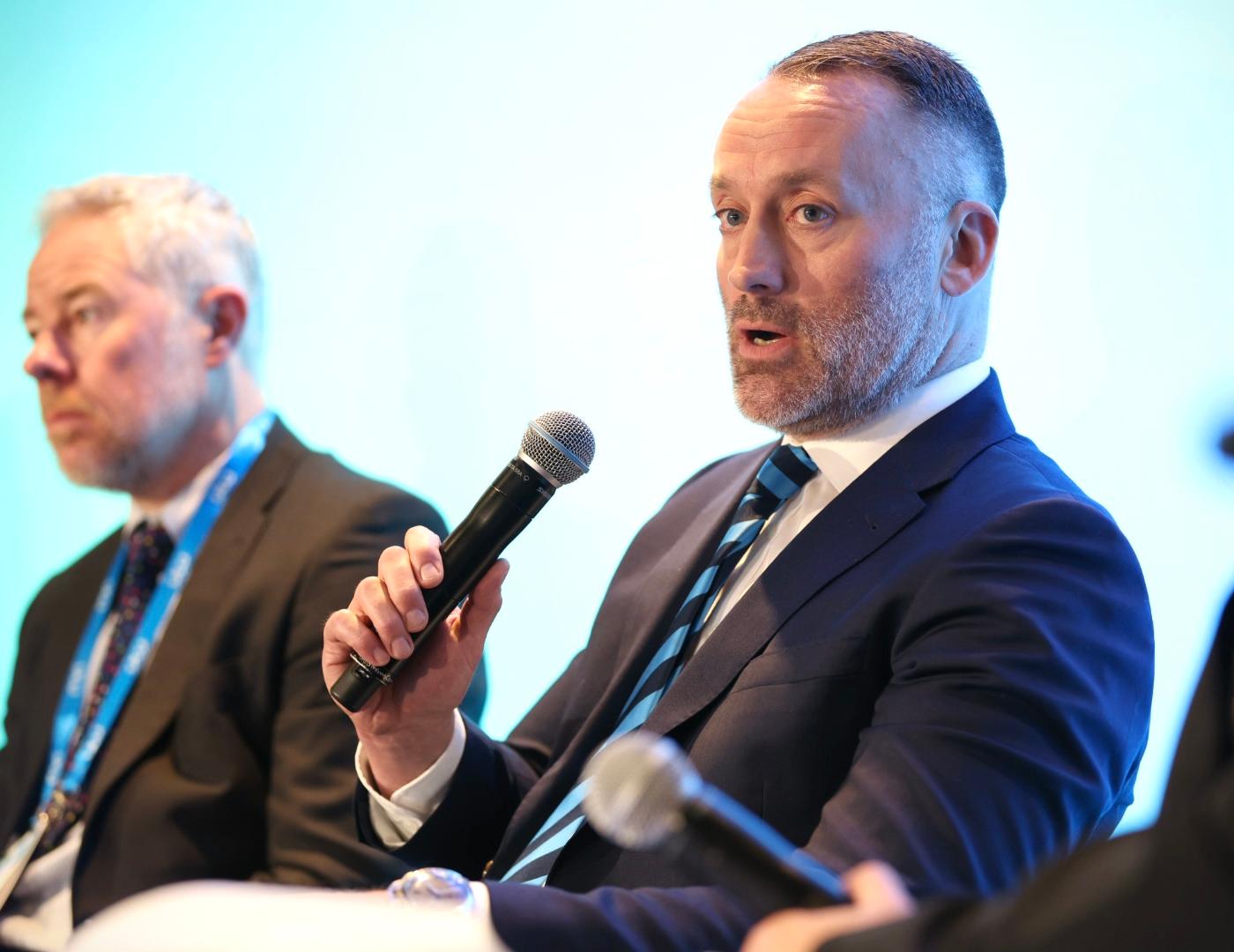
October is Mental Health Month, which is a useful reminder that supporting people isn't something that should only happen when there is an obvious problem.
In operations, I tend to think about that in practical terms. How do we build systems and processes that make it easier for our network to succeed? How do we make sure our teams have the support they need? And how do we stay close enough to the people in our business to notice when something isn't quite right?
Because by the time someone tells you they need help, there is a good chance they have been dealing with the issue for a while.
Sometimes the signs are obvious. Often they aren't. A business owner who is a little quieter than usual. Someone who normally makes decisions quickly taking longer to do so. A conversation that feels different from the ones you've had with that person before. It may be nothing. But it is usually worth asking the question.
The Numbers Are an Output
A big part of my role is looking at how we can refine the systems and processes around our network to help our offices perform at their best. That means looking at the way we work, where we can remove friction, where we can make things simpler and how we can give our Principals and teams better ways of working.
Ultimately, the sales numbers, listings and other measures we look at are outputs. They matter. They tell us whether what we are doing is working. But they don't tell us everything. The numbers tell us what is happening. Conversations often tell us why.
That is why I think being close to the network is so important. You need both perspectives. You need the data to understand the output, but you also need to understand the people, culture and leadership that sit behind it.
Systems Create the Opportunity
For me, the role of a franchisor is ultimately about enabling our network to be more successful. That means providing the systems, processes, tools and support that give our offices the best possible platform to operate.
But a good system on its own doesn't deliver success. The way people use it matters. The leadership around it matters. And the culture of the business matters. You can have a very good process, but if it isn't understood, adopted or supported by the people leading the business, it won't deliver what it should.
That is why I don't see operations as simply a matter of processes and performance reports. It is about understanding how those things come together. If we want our teams to support the network effectively, we need to build that thinking into the way we operate as a business ourselves.
Getting In Before the Escalation
This is where being close to the network becomes particularly important. If the numbers change, we can see the output. But the earlier we understand what is driving that change, the more options we have to respond.
Sometimes the answer is a process that needs refining. Sometimes an office needs a different approach or better support. Sometimes the issue has very little to do with the system at all. It might be leadership, culture, communication or simply the pressure that comes with running a business. You don't always know which one it is from a report. You find out by talking to people.
That is why I would much rather have a conversation early than wait for an issue to become an escalation.
When Everyone Is Busy
The irony is that the times when people most need that support are often the times when everyone is busiest. There are periods when offices are managing more listings, more buyers, more decisions and more pressure. Our own teams are dealing with plenty of demands as well. It is very easy for everyone to focus on what is immediately in front of them.
But that is often when staying connected matters most. A quick call. A visit to an office. A conversation with a Principal about what is really happening in their business. Those interactions can tell you things that a report never will. They also give us a chance to understand whether the systems and support we provide are actually doing what they are supposed to do. And that matters for people as much as it matters for performance.
Building a Healthy Business
We spend a lot of time talking about performance, systems and results, but none of those things exist separately from the people delivering them. A healthy business needs good systems and clear processes. It also needs leaders who understand their people and a culture where people feel supported enough to have an honest conversation when something isn't right.
That doesn't mean every conversation needs to become a discussion about wellbeing. It simply means paying attention. Being willing to ask how someone is going. Making time when the answer isn't straightforward. And creating an environment where asking for support doesn't feel like an admission of failure.
Mental Health Month is a timely reminder of the value of that connection, but I don't think it should be limited to one month of the year. It should be part of how we operate.
Before Someone Asks
For me, there is a difference between being available and being present. Being available means people know they can call you. Being present means you are paying enough attention to notice when a conversation might be useful before they make the call.
That is the approach I want us to bring to the way we support our network. We should be looking at the inputs as well as the outputs. We should be asking whether our systems and processes are helping our people succeed, while recognising that strong leadership and culture are what bring those systems to life. And we should be close enough to our network to understand when something needs attention before it becomes a bigger problem.
We can't control the market or guarantee every business will have the result it wants. What we can do is build an organisation around our network that gives people the best possible chance of success. And sometimes that starts with a conversation before anyone has to ask for help.
Domonic Thompson is Chief Operations Officer at Harcourts. This piece was contributed to Real Estate Today Australia for Mental Health Month.
This article was independently written and edited by Real Estate Today. © Real Estate Today 2026 – All Rights Reserved.
Real Estate Today is an independent real estate industry publication covering Australia and New Zealand.
THE-RET experience

The Morning Brief
The essential real estate briefing with Jake & Mia.
From 5:30am every weekday.

The 7:30 Report
The day's property news, context and what comes next with Dan & Sarah.
Five nights a week.





Trending
Raine & Horne Northern Beaches pushes from Mona Vale to Manly on a team-first model
Network News
Real Estate in 2026: Why It Feels Like I'm Studying for a Law Degree
Opinion
Harcourts Strengthens Property Management Support with Alessandra Knez Appointment
Network News
Don't Overlook the Smaller Commercial Property
Network News
Fifty New Possum Homes to Help Rescued South Australian Wildlife
Community