
Technology
When a Seller Asks ChatGPT Which Agent to Call, Will It Know You Exist?
AI-powered search is changing how homeowners research real estate agents. RET examines what agents can do to make their professional credentials, sales history and reputation easier to find and verify.
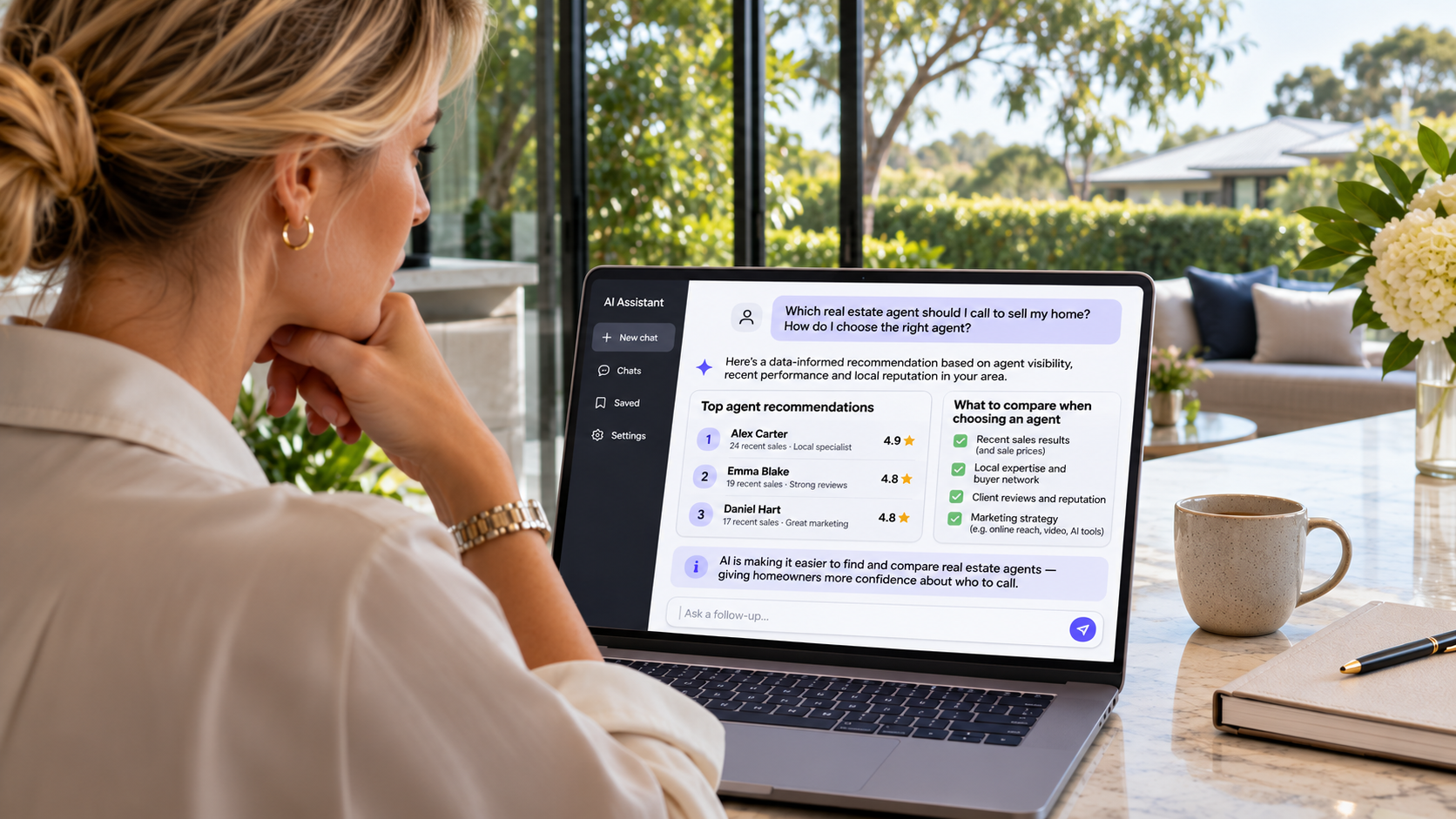
For decades, real estate agents have competed to be seen. Signboards, local sponsorships, referrals, Google search results, property portals and social media all play a part in helping a homeowner decide who to call. Artificial intelligence is introducing another route into that decision.
Imagine a seller typing into ChatGPT: “Which real estate agents should I consider to sell my home, and who has sold comparable properties nearby?” Instead of opening a dozen agent profiles, the seller may receive a written answer that brings together different sources, suggests questions to ask and, in some cases, identifies professionals to investigate further.
The commercial question for agents is clear: if a homeowner asks an AI assistant about your market, is there enough accurate, public information about your work for that assistant to find and assess?
From search results to answers
Traditional search has generally presented consumers with links to agency websites, directories, portals, maps and articles. AI-assisted tools may summarise available information and provide an answer before someone visits a website.
That does not mean AI tools reliably rank the best agents, or that a high placement is an endorsement. Answers can vary between prompts and services, draw on incomplete information and sometimes make mistakes. Consumers still need to check qualifications, reviews, relevant local results and the terms of any proposed agency agreement.
For agencies, however, the shift creates a practical visibility challenge. A capable agent with a strong offline reputation but an outdated website may have less useful publicly accessible information than a competitor whose credentials, service area and transaction history are clearly documented.
An impressive website is not necessarily an accessible one
A modern website can look excellent on a phone while making important information difficult for search engines and automated systems to retrieve. Key text may be embedded in images, pages may be blocked from indexing, or important agent details may be omitted entirely.
Google's Search Central guidance on AI features says the established fundamentals of search optimisation remain relevant to AI Overviews and AI Mode. It does not require a special AI-only file, unusual markup or guaranteed paid inclusion to qualify for those experiences.
In practical terms, agencies should start with crawlable pages, clear page titles, useful original content, descriptive internal links and accurate business information. Structured data can help describe entities and page content where supported, but no technical trick guarantees inclusion in an AI answer.
What does a seller actually need to know?
Many agent biographies rely on general claims: local expert, market leader, exceptional service. Those descriptions may sound reassuring, but they give consumers little material to verify.
A more useful agent profile shows what lies behind the claims: the suburbs and property types the agent works with, up-to-date and properly attributed sales examples, qualifications, relevant experience and authentic testimonials used with permission.
A luxury specialist might demonstrate experience with high-value homes through dated, verifiable transactions rather than relying on the word “luxury” alone. A property management team might explain its services, relevant portfolio experience and processes rather than simply asserting that it offers outstanding management.
There are limits. Not every transaction can or should be published in detail, and privacy, permission and advertising rules still apply. The goal is accurate evidence, not a larger collection of unsupported superlatives.
Why an independent public record matters
An agency website is only one source of information about a business. Genuine customer reviews, regulatory records, publicly documented achievements and independently reported industry developments can provide additional context.
Real estate industry publications including Real Estate Today, Elite Agent and Real Estate Business regularly cover agencies, personnel, technology and market changes. Relevant independent coverage can contribute to the publicly available record of a business. But a mention in any publication is not a guarantee of AI visibility, and paid or promotional coverage should not be misrepresented as independent endorsement.
For an agent seeking long-term credibility, factual consistency across these sources is more valuable than simply repeating their name or suburb as often as possible.
Five checks every agency can make now
- Search for the agency and its individual agents using different queries, then verify what is actually stated. Treat AI-generated answers as leads for fact-checking, not as authoritative rankings.
- Review whether agent biographies, service areas, current contact details and relevant credentials are accurate on the agency's own website and business listings.
- Check that important pages can be indexed, load reliably on mobile devices and present readable text rather than relying entirely on graphics.
- Publish relevant, dated achievements and property experience where permitted, and make sure client testimonials are genuine and correctly attributed.
- Correct outdated public information and avoid unsupported claims such as 'number one' unless the claim has a clearly defined, defensible basis.
The real competitive advantage is being verifiable
AI-powered discovery will not replace personal relationships, recommendations or the need for a seller to interview agents. A major property decision still requires judgment about the individual professional, their proposed strategy and the service they can provide.
It may, however, change how the shortlist is assembled. Agencies that keep accurate, useful and accessible public records will make it easier for both people and information systems to understand what they actually do.
The answer is not to build a website solely for ChatGPT. It is to make a professional record that stands up to scrutiny, regardless of whether the next homeowner discovers it through Google, an industry article, a referral or an AI assistant.
Further reading: Google Search Central: AI features and your website; Google SEO Starter Guide.





Real Estate Today in your inbox
The RET Nightcap and The Weekly Wrap, free for everyone in the industry.
The Agent Index
Presented by Urban Real Estate
Buyer enquiry this week, compared with last week?
Anonymous, one tap, no names. See straight away what’s happening in your local market.
Latest from The Chat podcast
Inside H360: how Harcourts turns data into better businessesNick Jewitt, Head of Data and Analytics, Harcourts · 21 Oct 2026
Latest stories