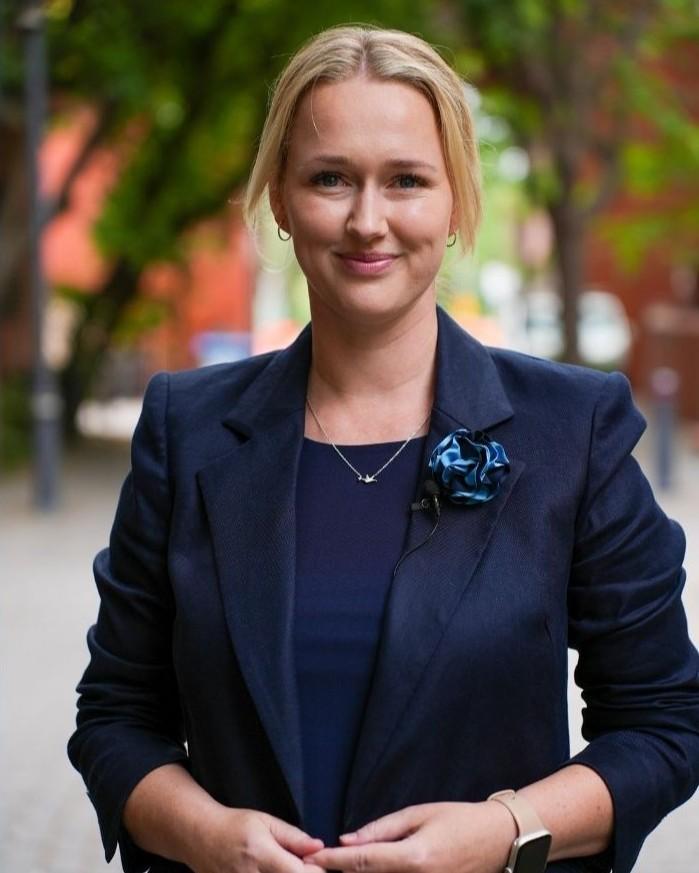
Heather Edwards, CEO Harcourts SA and interim CEO Harcourts WA, shares her leadership first priority.
Over the next few months, I'll be spending more time with our Western Australian network while we recruit a new CEO.
A few people have asked what my priorities will be. Some have assumed I'll be looking at performance, strategy or opportunities for improvement.
The truth is, my first priority is much simpler than that.
I want to understand the people.
One thing I've learned over the years is that every team has a story. Every business has its own history, its own way of doing things and its own reasons for getting there.
Sometimes what looks like resistance is actually experience.
What looks like caution might be a team that's been through a lot of change already. What looks like reluctance can simply be people wanting to understand where they're heading before they commit to another new direction.
I've learned not to assume.
Earlier in my leadership career, I probably felt more pressure to arrive with answers. These days, I'm much more comfortable arriving with questions. I've found I learn far more that way.
I've also realised that it's very easy to look at a business and see what could be different. It's much harder, and much more valuable, to understand why things are the way they are in the first place.
That doesn't mean accepting that everything should stay the same.
Every business needs to keep evolving.
But I don't think people respond well to change if they feel someone has judged them before taking the time to understand them.
I've never walked into a business where people got out of bed wanting to do a poor job.
In my experience, most people are doing the best they can with the leadership, systems, resources and experiences they've had. If something isn't working, I'm much more interested in understanding the environment that created it than I am in deciding who's at fault.
That way of thinking has changed how I lead.
It's also changed how I see people.
The longer I've worked with teams, the more I've realised that culture doesn't appear overnight. It's built over years through conversations, decisions, successes, disappointments and shared experiences. By the time a new leader arrives, that story is already well underway.
You can't really understand a team by looking only at where it is today.
You need to understand how it got there.
I've found people are remarkably open to new ideas when they know you've taken the time to understand their reality first. That doesn't mean agreeing with everything or avoiding difficult conversations. It simply means showing enough respect to learn before trying to lead.
One of the things I enjoy most about our industry is that no two offices are the same. Different communities bring different strengths, different personalities and different ways of working. I don't see that as something to iron out. I think it's one of the things that makes our network stronger.
For me, leadership has become less about arriving with a plan and more about staying curious for long enough to understand what a team already does well, where it needs support and what might be getting in its way.
Curiosity probably doesn't feature on many lists of leadership qualities.
Maybe it should.
Because in my experience, the more curious I've become, the better leader I've been.

 The Morning BriefWith Jake and MiaListen now
Tell us what’s happening
Trending
Victorian rental law changes 2026: What property managers need to know
Property Management
Have you been housefished? Australia gets a taste of real estate's new AI problem
Technology
Price falls won’t fix housing affordability, big four banks tell Senate inquiry
Market Update
Doncaster East Mansion Hits New York & International Spotlight Following Noel Jones Launch
Property of the Week
Raine & Horne puts family first on National Family Business Day
Main Story
This article was independently written and edited by Real Estate Today. © Real Estate Today 2026 – All Rights Reserved.
Real Estate Today is an independent real estate industry publication covering Australia and New Zealand.